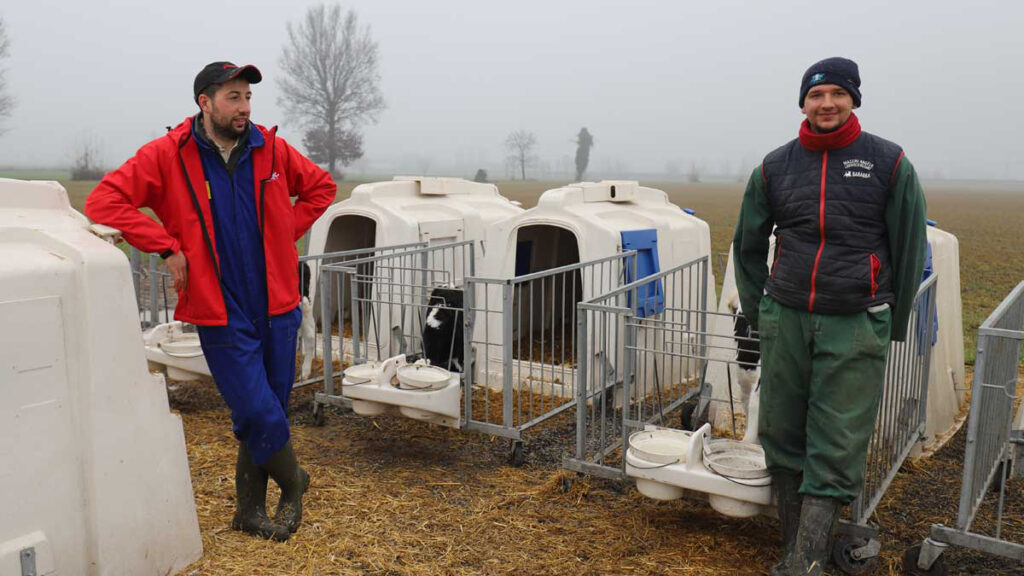
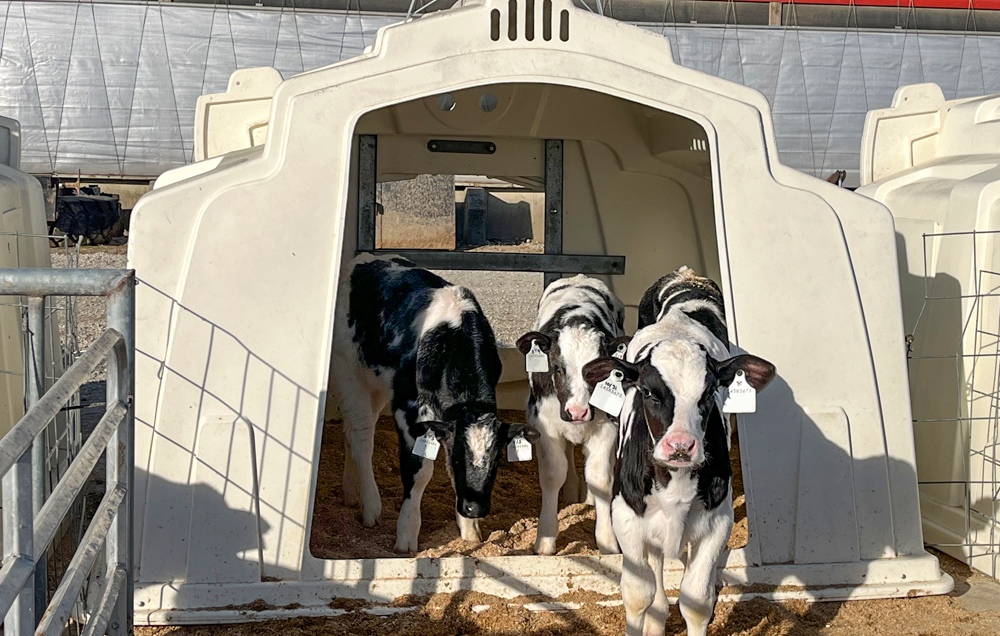
Group calf housing has become increasingly common on dairy farms looking to support calf welfare while offering opportunities to improve labor efficiency and preparing calves for life within the herd.
Unlike paired housing, which introduces calves to one companion, group housing brings multiple calves together in a shared housing environment. When managed correctly, group housing can encourage natural behaviors, reduce stress during future transitions, and simplify daily management.
Like any housing system, however, success depends less on the housing itself and more on how calves are grouped, fed, and managed.
What Is Group Calf Housing?
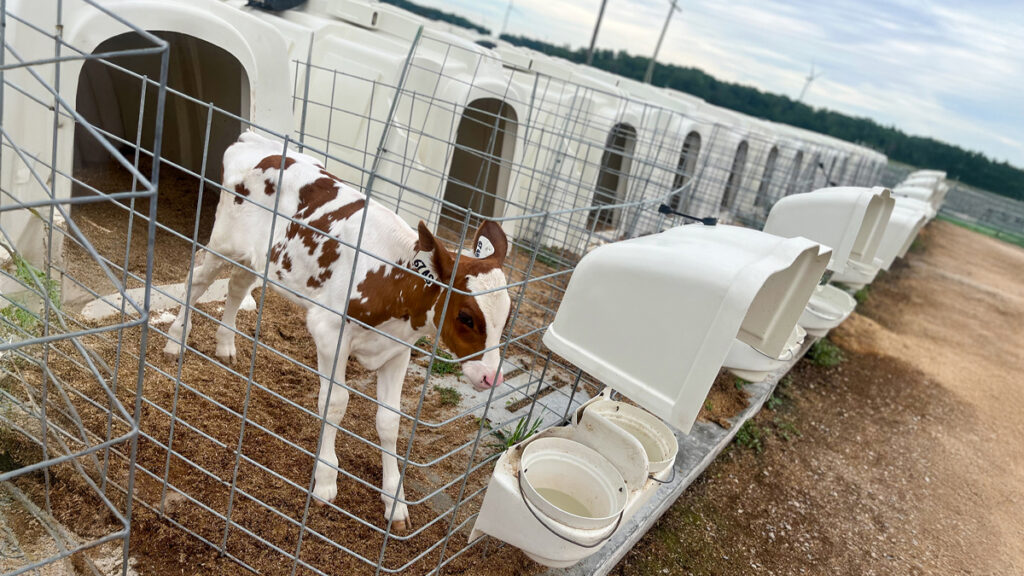
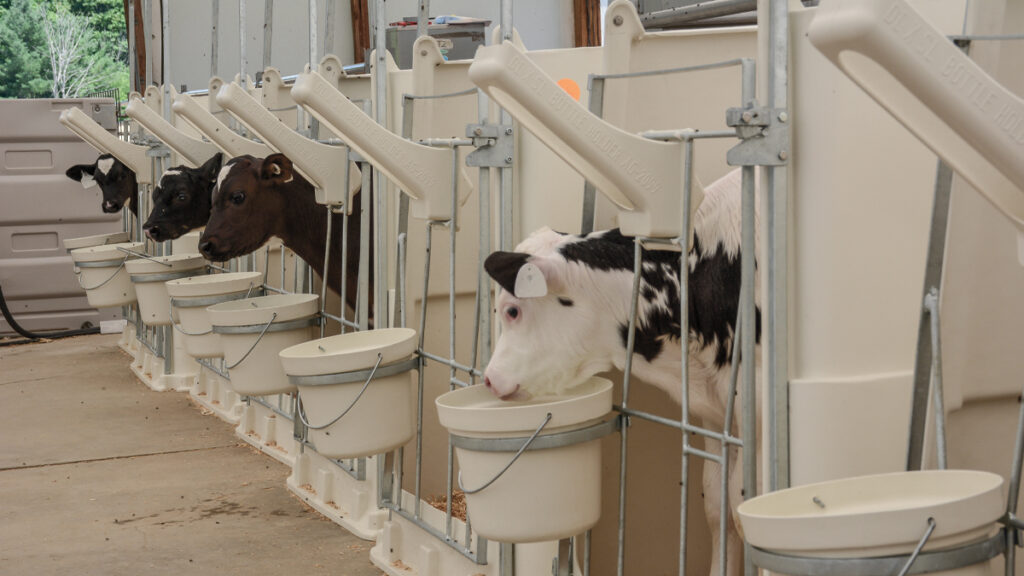
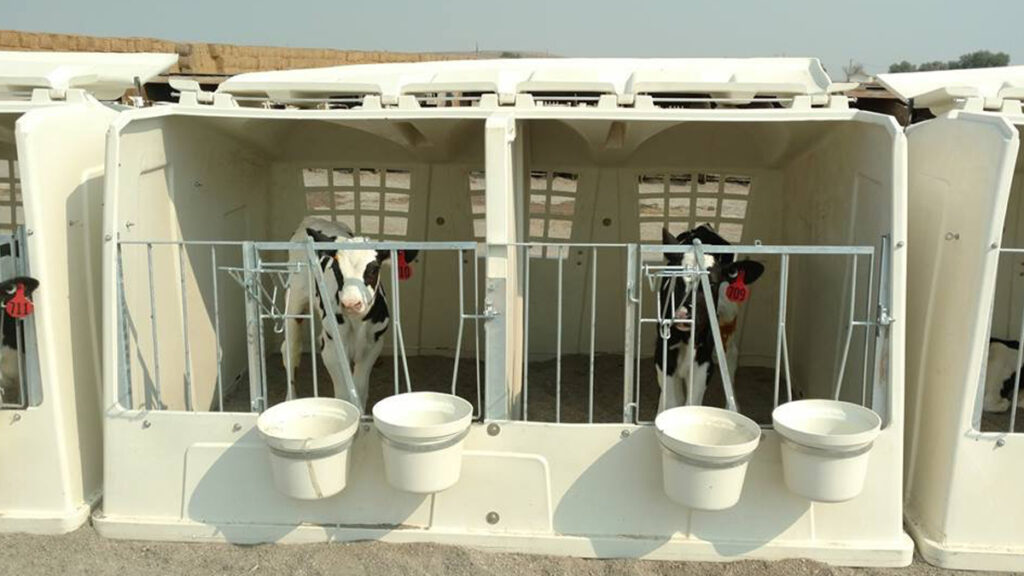
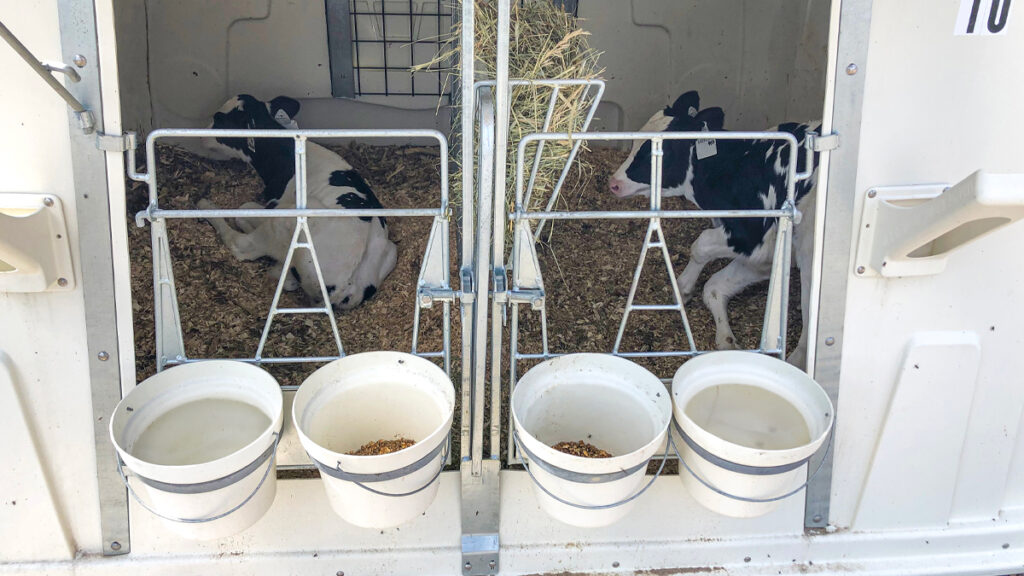
For the purposes of this article, group housing refers to raising three or more pre-weaned calves together in a shared housing environment. Depending on the operation, this may include group hutches, pens, or larger calf housing systems designed to accommodate multiple calves.
Some farms move calves into groups shortly after birth, while others first house calves individually or in pairs before transitioning them into larger groups.
The right timing depends on the operation’s facilities, health protocols, and management style.
Why Producers Choose Group Housing
Many producers adopt group housing for reasons beyond calf behavior.
Potential advantages include:
- Less labor associated with feeding and bedding.
- Efficient observation of multiple calves at once.
- Better preparation for life in larger heifer groups.
- More opportunities for exercise and natural movement.
- Improved use of available housing space.
For many operations, group housing also provides flexibility as herd size changes over time.
Group Size Matters
One of the biggest management decisions is determining how many calves belong in each group.
While there is no single ideal number for every farm, smaller groups are generally easier to monitor and manage than very large groups.
Smaller groups can make it easier to:
- Identify sick calves early.
- Monitor starter intake.
- Reduce competition for feed and water.
- Help support more consistent growth.
As group size increases, careful management becomes even more important.
Group Calves by Age and Size
One of the simplest ways to improve success is grouping calves with others of similar age and body size.
Large age differences may lead to unnecessary competition, especially around milk, grain, and resting areas.
Keeping groups relatively uniform allows calves to progress through feeding and weaning at a similar pace.
Keep Groups Stable
Whenever possible, avoid continually introducing younger calves into established groups. Stable groups reduce social disruption and may help limit disease transmission by minimizing the mixing of calves with different health histories.
Many producers combine stable grouping with an all-in, all-out management approach to simplify cleaning and reduce pathogen buildup between groups.
Give Every Calf Enough Space
Providing enough space is critical in any group housing system.
Regardless of the housing system, each calf should have enough space to:
- Lie down comfortably.
- Stand and stretch naturally.
- Access feed and water without crowding.
- Move freely throughout the housing environment.
Overcrowding increases stress, competition, and the risk of disease transmission.
Design Feed and Water for Success
As more calves share the same housing environment, feed and water access become increasingly important.
Providing adequate bunk space and multiple watering locations helps reduce competition and encourages consistent intake across the group.
Fresh starter grain and clean water should always be available.
What About Cross-Sucking?
Cross-sucking is one of the most common concerns producers have when moving calves into group housing. While it can occur, it is often influenced more by management than by the housing system itself.
Milk feeding practices, feeding speed, milk allowance, group size, and overall calf management are all recognized contributors in reducing non-nutritive sucking behaviors.
With proper management, many producers successfully raise calves in group housing while minimizing cross-sucking. Because there are several factors involved, we’ll cover practical strategies for reducing cross-sucking in a separate article.
Ventilation Becomes Even More Important
As more calves occupy the same housing environment, maintaining good air quality becomes increasingly important.
Proper ventilation helps remove moisture, dust, ammonia, and airborne pathogens while supplying fresh air throughout the housing environment.
Good airflow should provide fresh air without creating drafts directly on young calves.
Keep Housing Areas Clean Between Groups
An all-in, all-out approach is one of the most effective management practices for group housing.
Whenever possible:
- Move calves into groups together.
- Avoid continually adding younger calves to existing groups.
- Clean and disinfect the housing environment between groups.
- Allow the housing area to dry before introducing the next group.
Breaking the disease cycle between groups can significantly improve calf health.
Observe the Group as a Whole
One advantage of group housing is being able to observe calf behavior as a whole.
Healthy groups are generally active, curious, and eating consistently.
However, producers should also watch for individuals that separate themselves, eat less, or appear quieter than their pen mates.
Early identification remains one of the best tools for preventing disease outbreaks.
Is Group Housing Right for Every Farm?
Group housing offers many advantages, but it is not the right solution for every operation.
Successful group housing requires:
- Excellent colostrum management.
- Consistent feeding protocols.
- Proper ventilation.
- Adequate space.
- Good sanitation.
- Careful observation.
When these fundamentals are in place, many producers find group housing fits well into their calf-raising program.
The Bottom Line
Group calf housing can support healthy growth while allowing calves to express natural behaviors and prepare for life in larger social groups.
Like any housing system, success depends on thoughtful management rather than simply housing more calves together. Group size, ventilation, sanitation, nutrition, and daily observation all play an important role in raising healthy, productive calves.
Explore Group Calf Housing Solutions
Whether you’re transitioning calves from individual or paired housing or planning a larger group housing environment, choosing the right housing system can help support calf health while making day-to-day management easier.
References
The information in this article is based on published dairy calf research and industry best practices. For additional reading, see the references below.
- Bučková, K., Moravcsíková, Á., & Šárová, R. (2025). Invited review: A systematic review of the effects of pair housing on dairy calf welfare and productivity. Journal of Dairy Science, 108(12), 12878–12902.
- Costa, J.H.C., von Keyserlingk, M.A.G., & Weary, D.M. (2016). Invited review: Effects of group housing of dairy calves on behavior, cognition, performance, and health. Journal of Dairy Science, 99(4), 2453-2467.
- De Paula Vieira, A., von Keyserlingk, M.A.G., & Weary, D.M. (2010). Effects of pair versus single housing on performance and behavior of dairy calves before and after weaning. Journal of Dairy Science, 93(7), 3079-3085.
- Jensen, M.B. (2004). Computer-controlled milk feeding of group-housed calves: The effect of milk allowance and weaning type on calf behavior and performance. Applied Animal Behaviour Science.
- Miller-Cushon, E.K., & Jensen, M.B. (2025). Invited review: Social housing of dairy calves: Management factors affecting calf behavior, performance, and health—A systematic review. Journal of Dairy Science.
- Svensson, C., & Liberg, P. (2006). The effect of group size on health and growth in dairy calves. Preventive Veterinary Medicine.