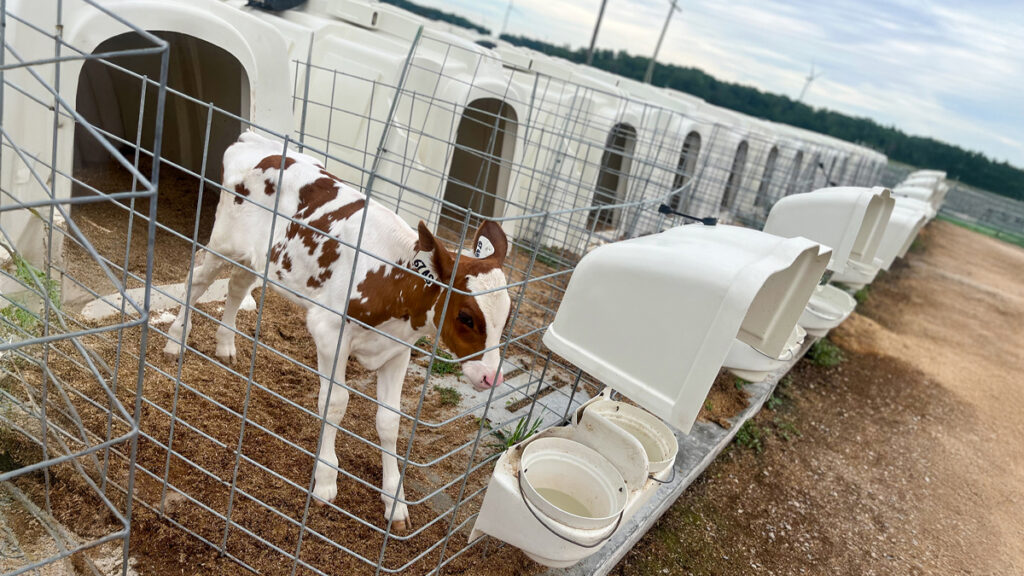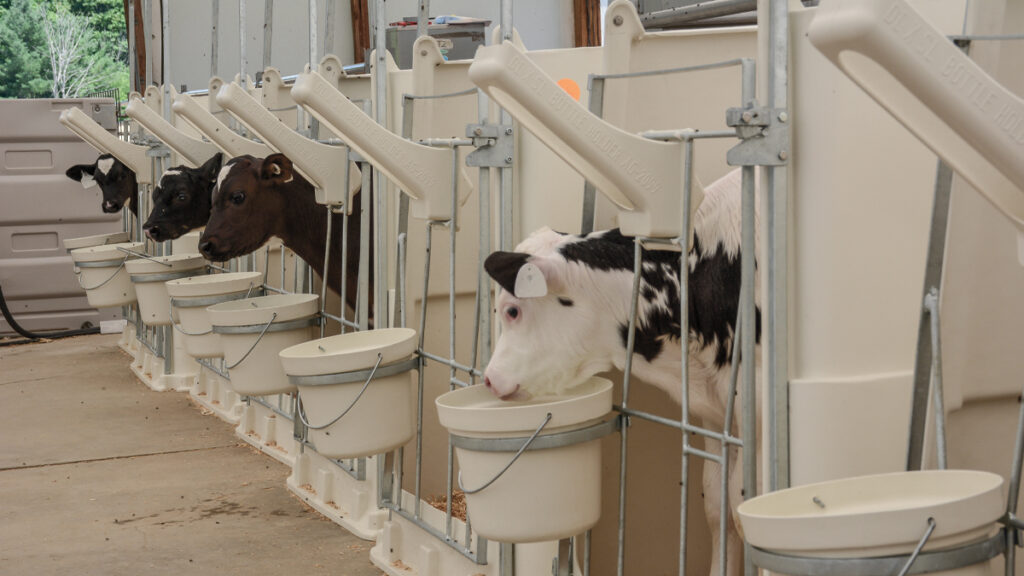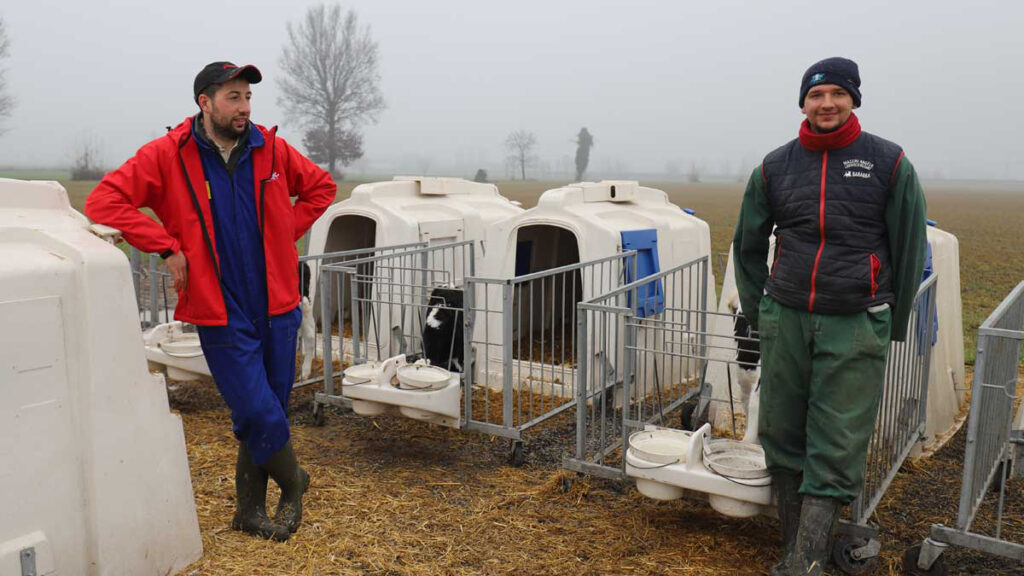
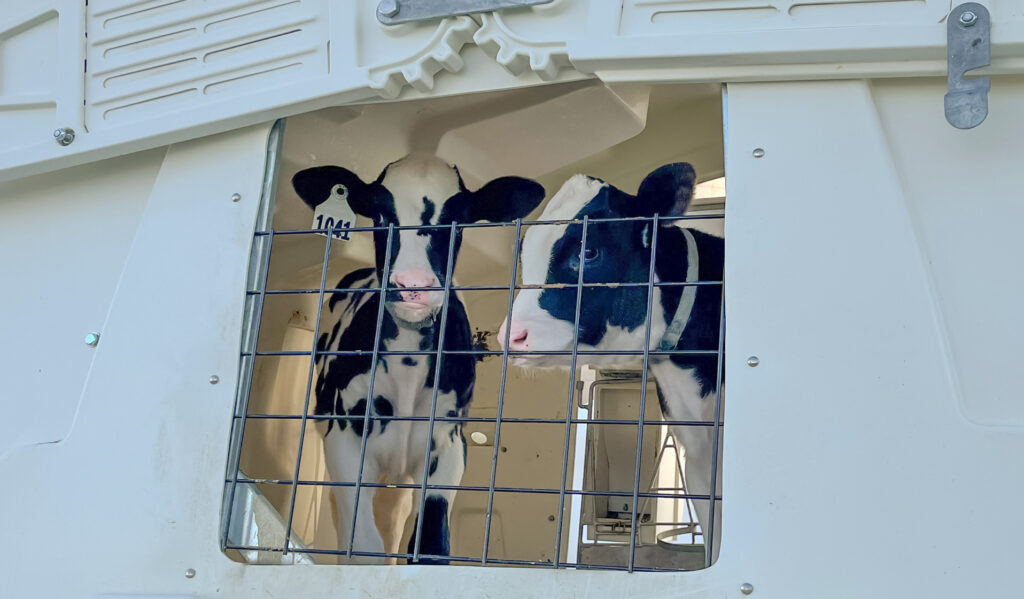
For decades, individual calf housing has been the standard for raising pre-weaned dairy calves. Individual hutches and pens make it easy to monitor health, control milk intake, and reduce nose-to-nose contact during a calf’s most vulnerable weeks.
But as research into calf behavior and development has grown, many dairy producers are taking a closer look at paired calf housing. Housing calves in pairs can preserve many of the health advantages of individual housing while providing additional social and behavioral benefits.
The key isn’t simply putting two calves together. Success depends on proper management, timing, nutrition, and facility design.
What Is Paired Calf Housing?
Paired calf housing places two calves together in the same pen or hutch during the pre-weaning period. Unlike larger group housing systems, paired housing limits social competition while still allowing calves to interact with one another.
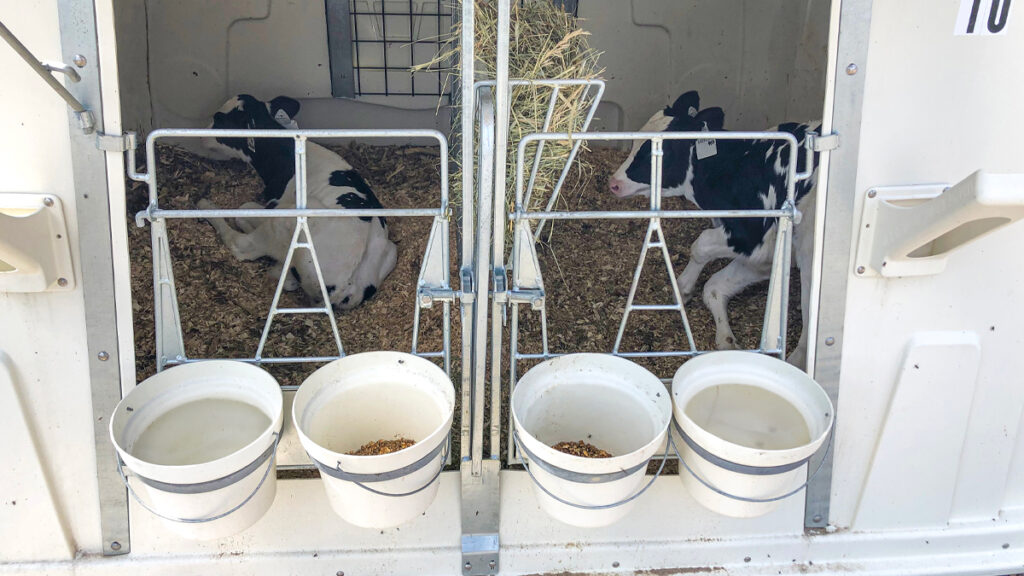
Many farms introduce calves individually for the first one to three weeks of life before pairing them once they are healthy, drinking well, and established on milk. Others use housing systems with removable dividers or center gates that allow calves to become familiar with one another before being fully paired.
Why Social Interaction Matters
Under natural or semi-natural conditions, calves begin forming social relationships during the first weeks of life and spend much of their time interacting with other calves. They learn by observing one another, playing, exploring, and responding to new experiences together.
When calves are housed individually, they miss many of these normal social opportunities.
Multiple studies have found that paired calves often:
- Spend more time playing and exploring.
- Begin eating starter grain sooner by learning from one another.
- Experience less stress during weaning.
- Show reduced fearfulness and adapt more readily to novel environments.
Play behavior is more than entertainment. It is considered an important indicator of positive welfare and healthy development.
Better Feed Intake and Earlier Starter Consumption
One of the biggest advantages of paired housing is its effect on starter grain intake.
Young calves naturally copy one another. When one calf begins eating grain, the other often follows.
Earlier starter intake helps prepare the rumen for weaning by encouraging rumen development before milk is reduced.
Higher grain consumption before weaning can lead to:
- Smoother transitions off milk
- Better weight gain after weaning
- Reduced growth slumps
- Support continued growth after weaning
Because calves encourage each other to eat, many producers report observing more consistent starter consumption in paired calves, although results can vary depending on management.
Reduced Weaning Stress
Weaning is one of the most stressful periods in a calf’s early life.
Calves experience changes in diet, routine, and nutrition all at once.
When calves have a companion during weaning, they often continue eating, resting, and exploring together. This social support can reduce vocalization, pacing, and other signs of stress that are commonly observed in individually housed calves.
Several studies have shown that paired calves maintain feed intake better during weaning than calves raised alone. By reducing the stress associated with weaning, calves are often better prepared for the transition into larger group housing.
Does Paired Housing Affect Health?
One of the biggest concerns producers have is disease transmission.
While adding another calf naturally increases contact between animals, research has shown that well-managed paired housing does not necessarily increase illness when basic calf management practices are followed.
Success depends on:
- Excellent colostrum management
- Clean, dry bedding
- Good ventilation
- Proper sanitation
- Pairing calves of similar age and size
- Pairing only healthy calves
Research has reported health outcomes comparable to individually housed calves under well-managed conditions. Likewise, many producers report achieving similar health outcomes in paired housing when these same management fundamentals are consistently maintained.
Keys to Successful Paired Housing
Like any calf management system, paired housing works best when management is intentional.
1. Pair Similar-Aged Calves
Pair calves that are close in age and size whenever possible. This helps reduce competition and ensures both calves develop at a similar pace.
2. Wait Until Calves Are Established
A common management approach is to keep calves separated during their first 7 to 21 days of life before allowing full social interaction. Housing systems with removable center dividers make this transition easier by allowing calves to be managed individually before simply removing the divider when they’re ready to be paired.
3. Provide Enough Space
Both calves need room to lie comfortably, stand, stretch, and move naturally.
Crowding increases stress and can reduce the benefits of social housing.
4. Keep Bedding Clean and Dry
Deep, dry bedding remains one of the most important factors for calf comfort and disease prevention regardless of housing style.
5. Ensure Easy Access to Feed and Water
Each calf should have unrestricted access to milk, starter grain, and fresh water without excessive competition.
Is Paired Housing Right for Every Farm?
Not every operation will benefit from the exact same housing strategy.
Some farms have labor systems, facilities, or management styles that make individual housing the best choice.
Others find paired housing provides a balance between individual care and social development without requiring the management changes associated with larger group housing.
The best system is one that fits your facilities while allowing you to consistently provide excellent calf care.
The Bottom Line
Paired calf housing offers an opportunity to support both calf welfare and performance during the pre-weaning period.
When calves are paired thoughtfully and managed well, producers may see benefits including earlier starter intake, reduced weaning stress, increased play behavior, improved confidence, and smoother transitions into group housing.
Like any calf housing decision, success comes down to more than the pen itself. Cleanliness, ventilation, nutrition, and attentive daily management remain the foundation of raising healthy, productive calves.
As dairy operations continue to evaluate calf housing strategies, paired housing is becoming an increasingly popular option for producers looking to combine excellent health management with the natural social development calves are designed to experience.
Explore Group Calf Housing Options
If you’re considering paired calf housing, choosing the right housing system is an important part of your success. Whether you’re looking for paired housing or planning ahead for larger group pens after weaning, we offer housing solutions designed to support healthy calf growth while making calf management easier.
Click here to explore Group Calf Housing solutions.
References
The information in this article is based on published dairy calf research and industry’s best practices. For additional reading, see the references below.
- Bučková, K., Moravcsíková, Á., & Šárová, R. (2025). Invited review: A systematic review of the effects of pair housing on dairy calf welfare and productivity. Journal of Dairy Science, 108(12), 12878–12902.
- Costa, J.H.C., von Keyserlingk, M.A.G., & Weary, D.M. (2016). Invited review: Effects of group housing of dairy calves on behavior, cognition, performance, and health. Journal of Dairy Science, 99(4), 2453-2467.
- De Paula Vieira, A., von Keyserlingk, M.A.G., & Weary, D.M. (2010). Effects of pair versus single housing on performance and behavior of dairy calves before and after weaning. Journal of Dairy Science, 93(7), 3079-3085.
- Duve, L.R., Weary, D.M., Halekoh, U., & Jensen, M.B. (2012). The effects of social contact and milk allowance on responses to weaning in dairy calves. Journal of Dairy Science, 95(11), 6577-6584.
- Jensen, M.B., & Larsen, L.E. (2014). Effects of level of social contact on dairy calf behavior and health. Journal of Dairy Science, 97(8), 5035-5044.
- Miller-Cushon, E.K., & Jensen, M.B. (2025). Invited review: Social housing of dairy calves: Management factors affecting calf behavior, performance, and health—A systematic review. Journal of Dairy Science.